
Utah Gives Growth Its Own Executive and Keeps the Provost on the Core


9 min read
What did the University of Utah announce about its provost and growth leadership?
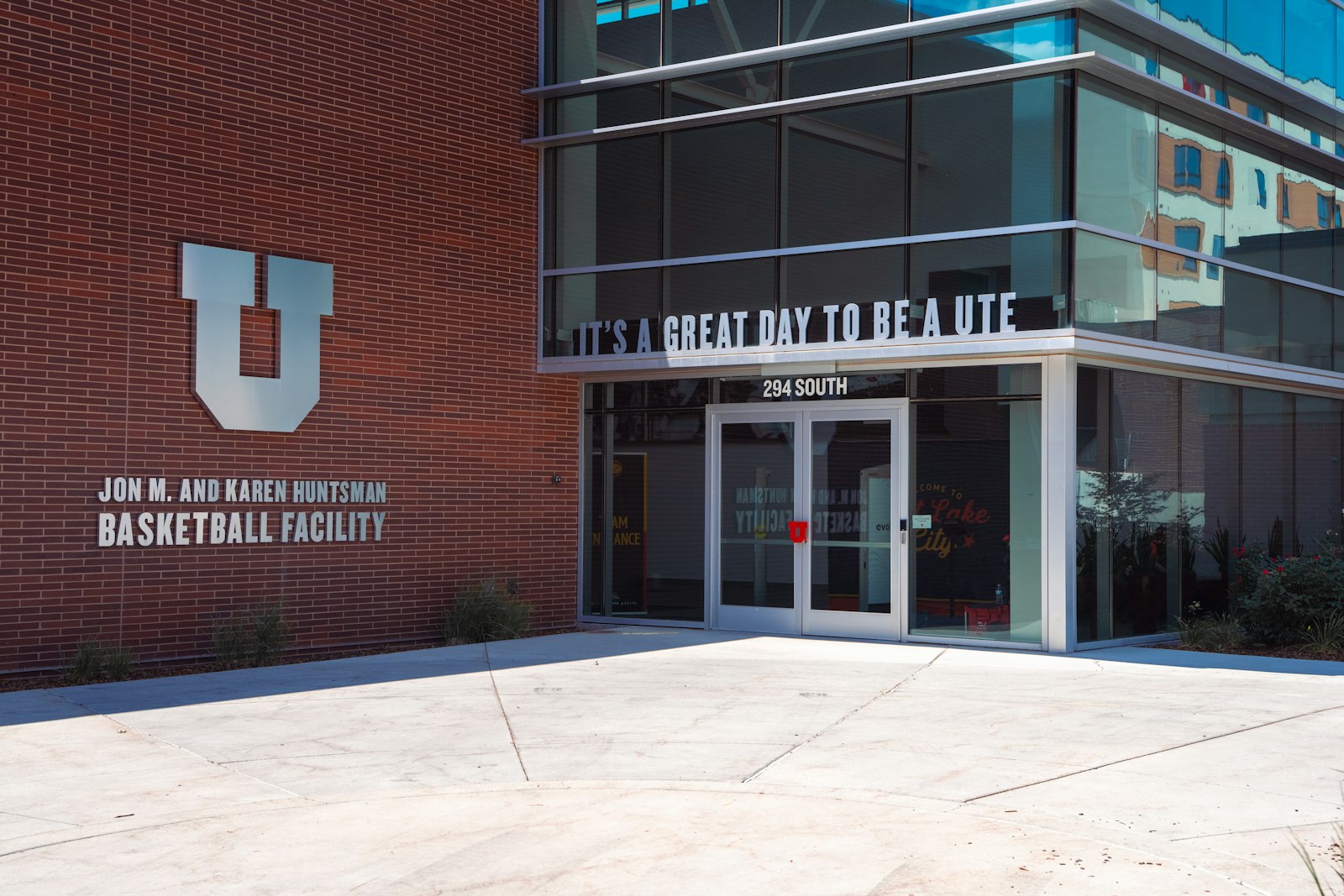
On November 18, 2026, the University of Utah announced it will split the provost role to create a dedicated growth executive. Effective Jan. 1, 2027, Mitzi Montoya becomes executive vice president for Strategic Growth and Transformation and president of a new Utah Global Campus, and Peter Trapa becomes provost, running the main campus academic enterprise.
Trapa's full title will be provost and executive vice president for Academic Affairs. Montoya was the provost until now. According to the university, total enrollment reached 39,060 in fall 2026, up 12.5%, including a 60% increase in online enrollment. Those figures come from the university's own announcement, which does not give independent baselines or show that the leadership structure caused the growth. The university describes the two roles as "distinct but separate."
My view is that Utah's structure is a reasonable response to a real management problem. A university with serious growth ambitions beyond its physical campus has a strong case for giving that work a dedicated executive instead of adding it to the provost's portfolio. The arrangement starts in 2027, so there is no track record yet, and the announcement leaves implementation details open.
Why does Utah's dedicated university growth executive matter for competitive strategy at other universities?
Utah's split matters because it treats growth beyond the campus footprint as a standing executive function with its own financial logic. Institutions that keep new-model expansion inside a full provost portfolio may see it lose priority to daily academic operations, depending on their size and governance.
The mandate is specific. Montoya is charged with developing and scaling new educational models, building strategic partnerships, and "generating new resources." The last phrase makes this a revenue strategy as much as an access strategy. A main campus has fixed physical capacity, and the university-reported 60% jump in online enrollment suggests where some demand is moving. A named campus president may also give employers, community colleges, and state agencies a clearer counterpart for agreements, though the announcement does not say what contracting authority the role carries.
Physical capacity is not the only ceiling, because some flagships also face policy limits. The University of North Carolina at Chapel Hill reportedly owes roughly $5 million to its system for a second straight year because out-of-state students reached 20 percent of the freshman class against an 18 percent cap. Where such caps exist, they limit a familiar growth channel and strengthen the case for a second one. Caps differ by state, so this is one example and not a universal pattern.
The provost's remaining job centers on student success. Utah credits Montoya's integrated advising and career services model with improving four-year and six-year graduation rates by 33% and 11%. These are university-reported figures, and the announcement summary does not say whether they are relative or percentage-point changes, or over what period. Protecting that work while enrollment expands is a full agenda. The CFO has to decide how revenue from new models returns to the main campus. Deans and faculty will be asked to teach new audiences, which is a workload and governance question before it is a marketing one.
Does a separate Utah Global Campus risk creating a second-tier University of Utah education?
Yes, a separate Utah Global Campus can become a lower-status brand with weaker academic standards if its leader answers only to growth targets. The risk may be manageable if the campus president and the provost share one set of degree standards and one student-success scorecard under a single faculty governance structure, and put the arrangement in writing.
The strongest objection to the model is that two executives can compete for faculty time, brand authority, and revenue, and the growth side has the louder metrics. The announcement text reviewed here does not spell out reporting lines, though both roles presumably report to the president. It also does not say how curriculum authority or faculty governance will be divided between them. That gap is where a second tier could form.
The alternative has its own problem. A single provost balancing a growth agenda against an academic quality agenda hides the tradeoffs inside one person's calendar. Two roles can force the negotiation into the open, where the president can referee it and faculty can see it, provided governance is transparent.
Utah's reported results show one leader handling enrollment growth and student-success gains together for a time, though the figures are university-reported and cannot be credited to one person. A plausible reading is that the next phase of work is larger than one role can carry. The president says the structure brings "greater focus" to both priorities. No results exist yet to test that.
What should presidents and cabinets do differently after Utah's reorganization?
Presidents and cabinets should decide who owns growth beyond the main campus and how that owner's revenue and academic standards connect to the provost's. Utah offers one possible model, still untested in its new form, and each institution can check its readiness with five questions assigned to named owners.
- President: Who owns growth beyond the main campus today, and does that person have the time and authority to deliver? Write a charter for each executive role that states who has the final say on degree standards.
- CFO: How will revenue from new educational models be shared with the main campus, and what will it fund? Settle the rules before launch, because disputes over a new unit's surplus are hard to resolve afterward.
- Provost: Does the student-success scorecard (graduation rates, advising contact, career outcomes) apply to every modality and every campus? Break results out by modality and student population so gaps for online, adult, or lower-income learners show up. Bring the faculty senate into the answer early.
- Enrollment and student affairs leader: Where do online and regional students get advising and career services? New audiences may be more exposed to aid-eligibility risk. A Lumina Foundation report, as covered by Inside Higher Ed, found about 960,000 students lost federal aid in 2025 after failing a federally required academic progress check, and that many colleges do not use the flexibility federal rules allow.
- Dean: Which programs can serve new audiences without degrading the experience, and what faculty workload and support would that require?
Frequently Asked Questions
Who will lead the University of Utah's new Utah Global Campus?
Mitzi Montoya, currently the provost, will lead it. Effective Jan. 1, 2027, she becomes executive vice president for Strategic Growth and Transformation and president of the Utah Global Campus. According to the announcement, she is charged with establishing the campus in 2027.
How much did University of Utah enrollment grow under Mitzi Montoya?
According to the university, total enrollment reached 39,060 in fall 2026, an increase of 12.5%, including a 60% increase in online enrollment. The university also reports that four-year and six-year graduation rates rose 33% and 11% during her tenure. These are institution-reported figures. The announcement summary does not say whether the graduation changes are relative or percentage-point, and the numbers do not by themselves show that her leadership caused them.
What is the difference between the University of Utah's provost and growth roles?
Peter Trapa, as provost, focuses on student success and the academic and research enterprise on the main campus. Montoya develops and scales new educational models, builds partnerships, and seeks growth opportunities, with a focus on expanding access and generating new resources across Utah and globally.
What is the main risk of giving growth its own executive?
The main risk is a second-tier academic experience. If the growth leader answers only to enrollment and revenue targets, standards on the new campus could drift from those on the main campus. Shared degree standards, shared faculty governance, and one student-success scorecard may reduce that risk.
Quick Hits
UNC Chapel Hill Fined $5M for Admitting Too Many Out-of-State Students
- Core Signal: For the second year in a row, Chapel Hill exceeded the 18 percent out-of-state limit, reaching 20 percent of the freshman class, and owes the UNC system roughly $5 million.
- Institutional Impact: Some public flagships operate under state or system enrollment caps, so cabinets at those institutions may want to model growth channels outside them. Caps vary widely by state.
Harvard Non-Tenure-Track Faculty End Strike
- Core Signal: Harvard's non-tenure-track faculty union ended its strike after the university raised its offer from a 3.5 percent to a 7 percent raise. No contract is settled, and the graduate student strike continues.
- Institutional Impact: Harvard is a well-resourced outlier, but labor costs are a live pressure on many campuses, which strengthens the case for diversifying revenue before bargaining pressure arrives.
Can Colleges Help More Students Maintain Financial Aid Eligibility?
- Core Signal: A new Lumina Foundation report, as covered by Inside Higher Ed, finds that about 960,000 students lost federal aid in 2025 after failing an academic progress check, and that many colleges do not use the flexibility federal rules allow.
- Institutional Impact: Institutions that expand access to new student populations should review their academic progress policies with financial aid staff, since retention and aid eligibility are closely linked.
Sources
- University of Utah, @theU: University of Utah announces leadership appointments to advance academic excellence and expand statewide, global impact (institutional press release and the primary source for all Utah figures, which are self-reported)
- Jessica Blake: UNC Chapel Hill Fined $5M for Admitting Too Many Out-of-State Students
- Inside Higher Ed: Harvard Non-Tenure-Track Faculty End Strike
- Inside Higher Ed: Can Colleges Help More Students Maintain Financial Aid Eligibility?