
Normalized Transformers and the Economics of Compute: Analyzing Hyperspherical Geometry for Institutional AI Infrastructure


6 min read
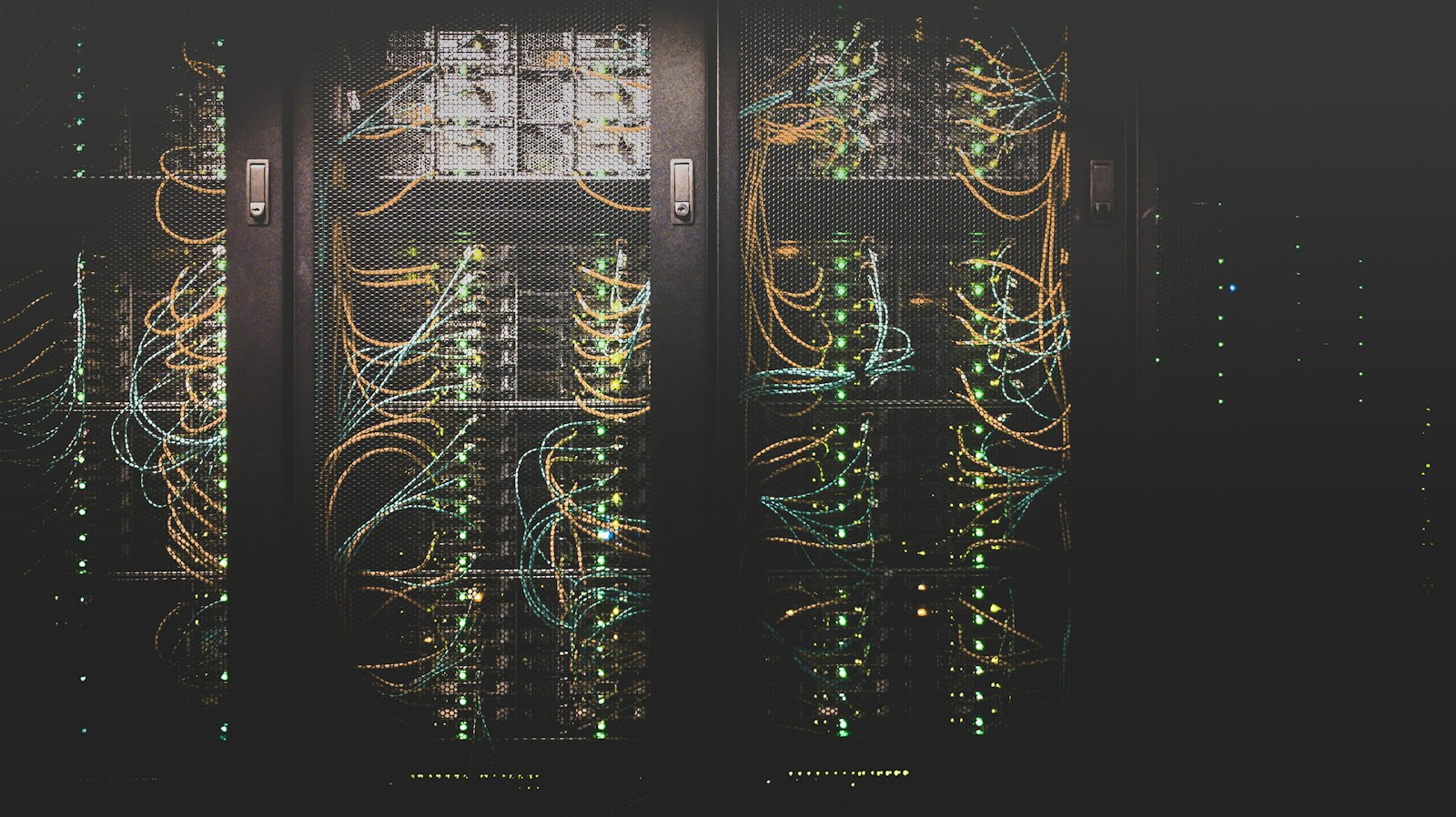
Normalized Transformers (nGPT) are an artificial intelligence architecture developed by NVIDIA Research that constrains all token embeddings, internal representations, and projection matrices to a unit-norm hypersphere (Sᵈ⁻¹). By replacing unbounded vector additions with geodesic updates along spherical arcs, nGPT reduces the pretraining token budget required to reach baseline validation perplexity by 4x to 10x across context windows from 1,000 to 8,000 tokens. This mathematical breakthrough allows higher education institutions and enterprise IT leaders to pretrain sovereign, domain-specific foundation models on local hardware clusters without incurring massive commercial cloud compute expenditures.
Institutional Assessment Matrix: Commercial APIs vs. On-Premises nGPT Deployments

Evaluation Dimension   Commercial Frontier APIs        On-Premises nGPT Architectures
-------------------------------------------------------------------------------------
Token Economics        Recurring operational expense   Amortized institutional compute
Pretraining Profile    Capital-intensive frontier scale 4x to 10x token efficiency
Data Boundaries        Third-party transit and DPAs    Air-gapped on-premise containment
Compliance Surface     External vendor risk            Internal FERPA, RBAC, and model auditing
Hardware Target        Hyperscaler cloud clusters      Local HPC and institutional GPU clusters
Geodesic Motion on the Unit Hypersphere
Standard Transformer architectures permit embedding vectors, attention weights, and feedforward representations to scale in magnitude throughout deep networks. As hidden states pass through successive residual additions, vector norms fluctuate unpredictably. Machine learning engineers counter these instabilities by stacking normalization layers such as LayerNorm or RMSNorm and enforcing conservative warm-up schedules. While these methods stabilize optimization, they leave representations structurally unconstrained. The model expends parameter capacity and training steps managing arbitrary vector drift instead of encoding semantic relationships.
The nGPT (Normalized Transformer) architecture constrains all token embeddings, projection matrices, and hidden states to the surface of a unit hypersphere (Sᵈ⁻¹). Because every vector has a constant Euclidean norm of one, internal operations calculate cosine similarities directly, without unbounded inner products. The network translates matrix transformations into angular displacements. The standard additive residual stream is replaced with geodesic updates on the hyperspherical manifold, which moves representations along spherical arcs without altering vector lengths.
Standard Transformer:
  x_{l+1} = LayerNorm(x_l + Attention(x_l))
  Result: Vector magnitudes fluctuate, requiring compensatory normalization layers.

nGPT Formulation:
  h_l = Attention(x_l) / ||Attention(x_l)||
  x_{l+1} = Slerp(x_l, h_l; α)
  Result: Representations travel along geodesic arcs on the unit hypersphere S^{d-1}.
To govern these geodesic transitions, the authors introduce layer-specific learnable eigen-learning-rate vectors. These parameters scale the angular step size of representations during attention and feedforward passes. This design stabilizes optimization from the first training step. The architecture eliminates standard learning rate warm-up schedules. Across context windows from 1,000 to 8,000 tokens, nGPT matches the validation loss of calibrated GPT baselines while consuming 20 to 25 percent of the pretraining steps. By removing magnitude degrees of freedom, the network allocates its parameter budget directly to directional semantic encoding.
Institutional Infrastructure: Evaluating On-Premises Domain Models
Academic high-performance computing centers and enterprise IT departments operate within strict capital and power constraints. While commercial frontier developers train models across clusters spanning tens of thousands of accelerators, institutional facilities often manage dozens of GPUs shared across multiple operational units. Under standard Transformer training dynamics, training custom models from scratch was cost-prohibitive. This economic reality drove widespread institutional reliance on commercial APIs.
A fourfold to tenfold improvement in token efficiency alters this resource equation for domain adaptation. Workloads that previously required prohibitive cluster allocations can now run within standard academic maintenance windows. Because nGPT maintains normalized representations throughout the forward pass, low-precision quantization to FP8 or INT4 formats exhibits fewer degradation artifacts caused by extreme activation outliers. This lowers operational VRAM requirements on local workstations.
Local hosting aligns directly with data governance mandates under the Family Educational Rights and Privacy Act (FERPA), the Health Insurance Portability and Accountability Act (HIPAA), and export regulations such as ITAR. Processing confidential research data or regulated student records through external APIs introduces legal liability and requires complex vendor data processing agreements.
On-premises foundational training transfers governance obligations directly to internal teams. Training models on institutional data introduces distinct operational responsibilities:
Student Record Protections: Pretraining or fine-tuning on unstructured records, such as advising notes, creates risks of latent memorization and unauthorized data extraction. Differential privacy mechanisms and rigorous de-identification pipelines must precede data ingestion.
Algorithmic Bias Auditing: Models trained on historical institutional archives can codify legacy administrative biases into automated advising systems. Independent algorithmic audits must precede production rollouts.
Weight Security: Local model weights containing synthesized research discoveries or institutional data are proprietary assets. They require role-based access controls and hardware-level isolation.
Centrally deployed nGPT models allow institutions to replace ad-hoc departmental API wrappers with unified local infrastructure. Central IT retains direct authority over data provenance, model versioning, and operational reliability.
Strategic Guidance for Institutional Leadership
Benchmark Local Architectures: Direct research computing groups to benchmark the open-source nGPT architecture against standard baseline transformers on internal clusters. Teams should validate real-world throughput, numerical stability, and validation perplexity on localized datasets.
Audit Training Corpora: Inventory all administrative and research text planned for domain pretraining. Enforce strict redaction of protected student records, patient data, and export-controlled technical specifications before cluster ingestion.
Analyze Multi-Factor Economics: Evaluate whether specific institutional workloads justify localized pretraining. Balance hardware depreciation, staffing overhead, and compliance maintenance against the predictable operational costs of commercial APIs.
Quick Hits
Deterministic Stability for Autonomous Systems: Automated Discovery of Global Lyapunov Functions
Core Signal: Researchers Alberto Alfarano, Amaury Hayat, and François Charton integrated symbolic transformers with formal verification loops to synthesize global Lyapunov functions for continuous non-linear dynamical systems, solving problems beyond the reach of standard Sum-of-Squares optimization.
Institutional Impact: Engineering faculties and robotics laboratories gain an analytical method to verify continuous control systems, providing mathematical safety proofs for physical automation and cyber-physical research.
Defeating Model Autophagy: Surplexity Filters Synthetic Degradation
Core Signal: The Learning by Surprise framework uses an information-theoretic metric called surplexity to screen and admit high-entropy synthetic data during iterative language model training.
Institutional Impact: Data engineering teams fine-tuning internal models on synthetic text can systematically exclude low-variance model exhaust, preserving linguistic diversity and model stability across successive generations.