
ERP Modernization in Higher Ed: Automate the Workflow


7 min read
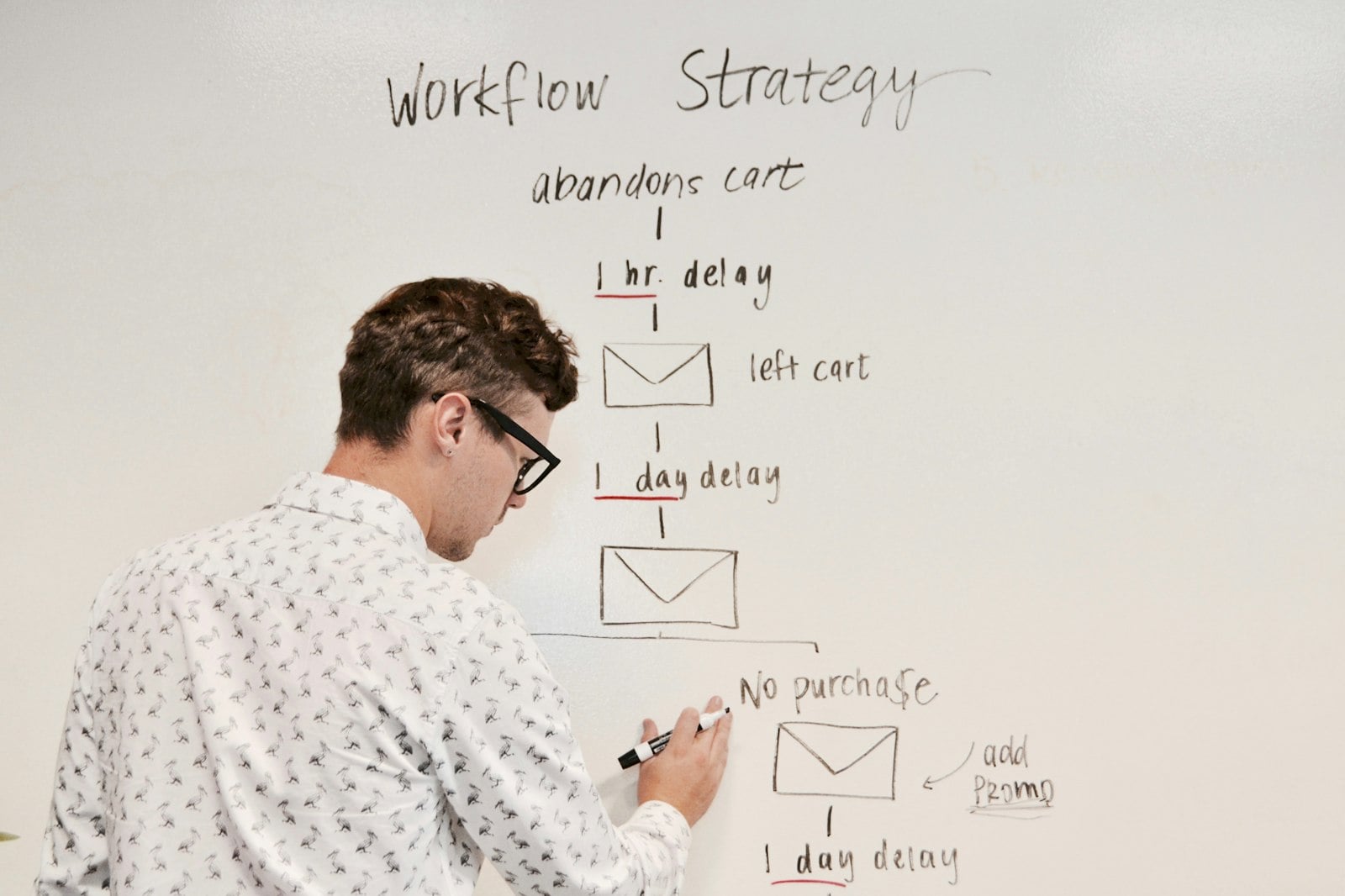
ERP modernization is no longer an IT refresh cycle. It is the operating decision that determines whether a college can run leaner and serve students better at the same time.
The pressure is not abstract. WICHE projects that the high school class of 2025 was the peak, with graduate counts declining through 2041, and some smaller privates have already closed or been absorbed. At J.P. Morgan's recent Higher Education Summit, CFOs and presidents put ERP modernization on the same short list as revenue diversification and career outcomes. Auburn's CFO called technology investments among the most consequential decisions institutions will make for the next two decades.
The institutions getting real value from modernization share one trait: they treat the ERP as a way to change how work moves, not as a new place to store the same paperwork. That shows up in two places — the back office, through workflow automation, and the front door, through the student experience.
Why legacy ERP environments stall
Most campuses do not have an ERP problem. They have a workflow problem that the ERP was never configured to solve.
After two decades of customization, the typical Banner, Colleague, PeopleSoft or Jenzabar environment carries the same symptoms:
Manual handoffs between offices. A transcript, a change of major or a financial aid appeal moves by email, PDF and spreadsheet. The ERP records the outcome but not the work.
Shadow systems. Departments build their own Access databases, Excel trackers and point tools because the core system is too rigid or too slow to change. Each one is a reconciliation job waiting to happen.
Overnight batch thinking. Holds, balances and registration eligibility update on a nightly job. Students and staff make decisions on yesterday's data.
Customizations nobody owns. Modifications written by people who left years ago make every upgrade expensive, so institutions defer upgrades and fall further behind.
The J.P. Morgan panel framed this well: manual processes and disconnected systems can no longer produce the decisions leaders need under tighter budgets. Baylor's experience is the clearest proof point. Its president said the ERP it implemented years earlier was what gave leadership granular financial visibility during a recent budget assessment — deans and chairs told her, "I never knew that much about my budget before."
Workflow automation: start where volume meets friction
Automation pays off fastest in high-volume, rules-based processes that currently cross two or more offices. J.P. Morgan's higher ed bankers make the same point from the treasury side: mapping a process end to end, from student payment to vendor payment, is where the streamlining opportunities surface.
| Process | What to automate | What changes |
| Student payments and refunds | Payment posting, refund disbursement, real-time balance and hold release | Cash applied same day; holds clear without a phone call |
| Financial aid verification | Document intake, missing-item reminders, status updates pushed to the student | Fewer packages stuck in "incomplete"; faster awarding before deposit deadlines |
| Registration exceptions | Overrides, prerequisite waivers and add/drop approvals routed by rule | Approvals in hours, not weeks; full audit trail |
| Transcript and transfer credit | Inbound transcript ingestion and articulation matching | Transfer students see credit evaluations before they commit |
| Procure-to-pay | Requisition routing, invoice matching, vendor payment | Fewer late payments; spend visibility by department |
| Student account holds | Event-driven hold placement and removal | No more nightly-batch surprises at registration |
Two rules keep automation from becoming a new layer of mess. First, standardize the process before you automate it; automating a ten-step workaround just makes the workaround faster. Second, integrate through APIs and events rather than another round of custom code in the core, so the next upgrade does not break what you built.
AI raises the stakes here. Leaders at the summit noted that AI is accelerating expectations for faster, more connected systems. AI agents and assistants are only as good as the data and workflows underneath them — an institution still running on batch jobs and email approvals will not get much from bolting a chatbot on top.
Student experience: the ERP is the friction students feel
Students never log into "the ERP," but they feel every one of its gaps. A hold they can't explain, a class they can't get into, a refund that takes three weeks — each one is a back-office workflow surfacing at the front door.
Auburn's CFO tied modernization directly to this. She described using institutional data to find inefficiencies, understand which programs students actually want, and remove bottlenecks like students being shut out of required courses. That is the right frame: the student experience case for ERP modernization is a data and workflow case, not a portal redesign.
Where modernization moves the needle for students:
One status, one place. Aid, billing, holds and registration eligibility visible together, updated in real time, with a plain-language next step.
Course demand that drives the schedule. Waitlist, degree-audit and enrollment data feeding section planning, so bottleneck courses get capacity before students get stuck.
Proactive outreach instead of reactive tickets. Events in the ERP — a missing document, an unpaid balance, a dropped course below full-time — trigger a nudge before they become a problem.
Self-service that actually resolves. Conversational support grounded in the institution's own policies and the student's actual record answers the routine questions, and routes the rest to a person with context attached.
Faster money movement. Refunds and aid disbursements that land in days matter enormously for students living close to the margin.
This connects to the summit's other big theme: outcomes and affordability. Every week a student spends untangling an administrative problem is a week not spent on coursework, work or career preparation. Removing friction is a retention strategy.
Sequencing modernization without a big-bang bet
Few institutions can absorb a multi-year, all-at-once replacement — financially or culturally. The better path is incremental, with each step paying for the next.
Map the work, not the system. Pick five to ten processes that touch students or cash. Document how they actually run today, including the spreadsheets and email chains.
Retire customizations deliberately. Sort every modification into keep, replace with delivered functionality, or move outside the core. This is what makes future upgrades affordable.
Build an integration layer. Expose ERP data through APIs and events so new tools — including AI — plug in without touching the core.
Automate the top processes and measure them. Track cycle time, touches per transaction, and student contacts generated. Publish the before-and-after.
Decide on the core platform with evidence. By this point you know whether you need a new ERP, a cloud move of your current one, or simply a cleaner version of what you have.
The tools are the easy part. As the J.P. Morgan piece notes, lasting change depends on adoption and process discipline — Baylor's president described its ERP project as a test of whether the whole institution could change how it works. Governance, data ownership and change management need a named executive sponsor outside IT.
The bottom line
The enrollment cliff and budget pressure will force operational change one way or another. Institutions that modernize around workflows — automating the handoffs, killing the shadow systems, and putting real-time data in front of students and staff — will spend less to deliver a better experience. Those that treat ERP as a software purchase will spend more and get the same experience on a newer screen.
The question for leadership is not "which ERP?" It is "which five processes are costing us the most time, money and student goodwill — and what would it take to fix them this year?"
Sources
J.P. Morgan, How higher education leaders navigate financial pressure to drive growth, October 14, 2026
WICHE, Knocking at the College Door: Projections of High School Graduates, 11th ed., 2024 (as cited by J.P. Morgan)