
DeepSeek-V4.1-Flash-1017 Compresses Agent Trajectories: What Open Weights Mean for Campus Compute Budgets


6 min read
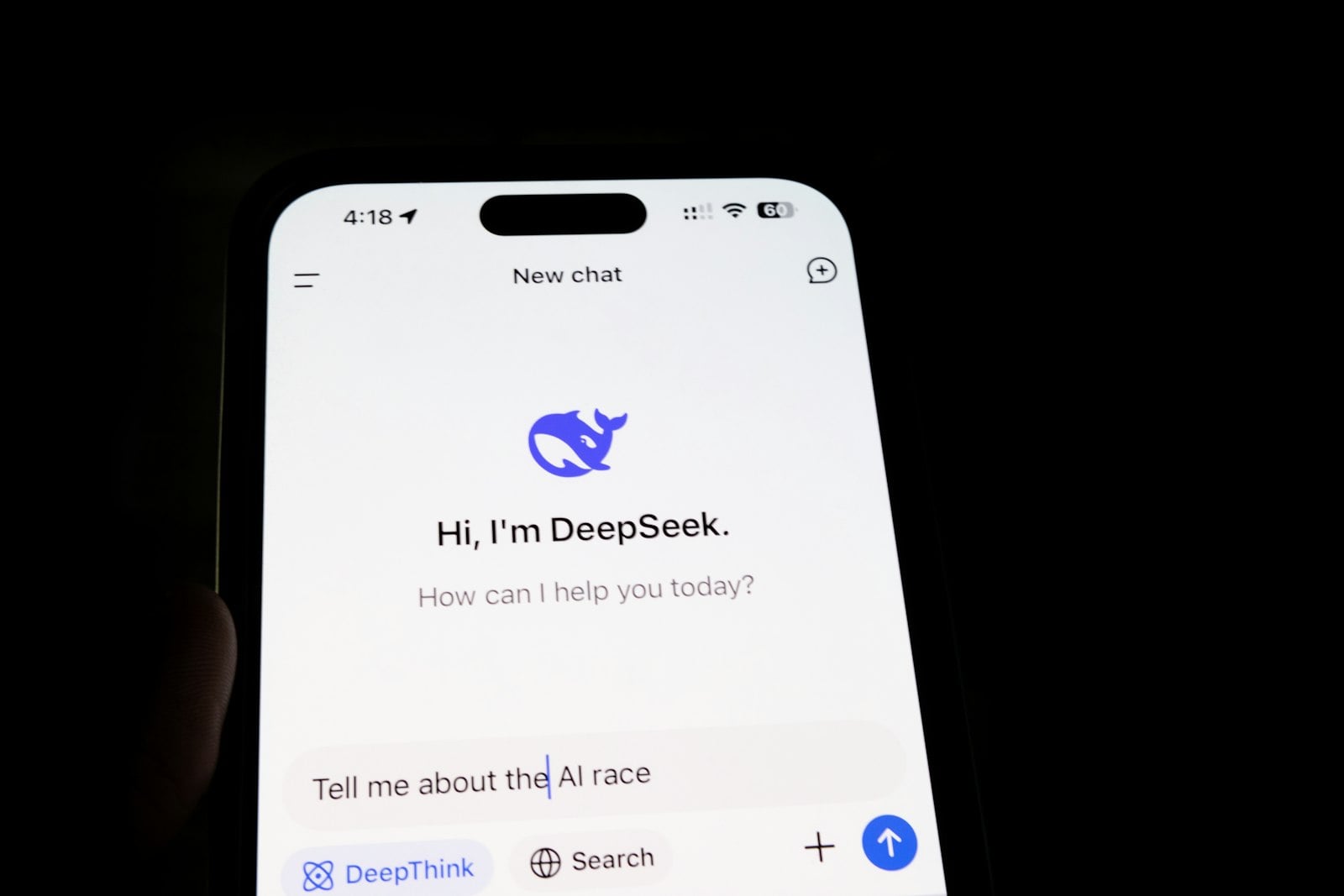
DeepSeek released DeepSeek-V4.1-Flash-1017 with weights available on Hugging Face. The model uses reinforcement learning with self-feedback to reduce multi-step agent token generation by up to 28 percent. By penalizing recursive conversational loops, the architecture favors concise execution paths over verbose reasoning traces, achieving a 77.0 score on the DeepSWE benchmark. For campus technology officers and enterprise architects, trajectory compression paired with open weights offers an alternative to the escalating, volatile billing structures of commercial cloud APIs.
+-------------------------------------------------------------------+
|               Multi-Turn Agent Execution Lifecycle                |
+-------------------------------------------------------------------+
                                  |
                                  v
                   [ Task Context & Intent Parse ]
                                  |
                                  v
+-------------------------------------------------------------------+
| Standard Frontier Agent Loops     | DeepSeek-V4.1-Flash-1017 RLSF |
|-----------------------------------|-------------------------------|
| Trajectory expansion:             | Trajectory compression:       |
| * Repetitive self-critique loops  | * Pruned intermediate steps   |
| * Unconstrained CoT traces        | * Direct parameter selection  |
| * Compounding KV-cache overhead   | * Reported ~28% token drop    |
+-------------------------------------------------------------------+
                                  |
                                  v
                   [ Structured API / Tool Action ]
                                  |
                                  v
                  [ Deterministic State Evaluation ]
Under the Hood
The central bottleneck in multi-turn agent systems is context accumulation. When an agent loops through environment inspection, tool calling, and error parsing, token counts compound rapidly across each execution step.
DeepSeek addresses this accumulation through reinforcement learning with self-feedback (RLSF) tuned for brevity. The training reward function evaluates intermediate chain-of-thought traces, penalizing self-reflection loops that fail to alter tool arguments or state outcomes.
While DeepSeek reports that this method cuts trajectory length by 28 percent without damaging its 77.0 DeepSWE benchmark rating, real-world implementations require caution. Heavy pruning of reasoning traces can impair an agent's ability to recover from unexpected environment errors or novel API exceptions that require exploratory step-backs.
The checkpoint integrates directly into developer harnesses like Claude Code, Codex, and DeepSeek Harness through the deepseek-flash API endpoint. Crucially, the weights are published on Hugging Face, allowing local execution via vLLM or TensorRT-LLM without recurring external API dependencies.
Inference memory scaling depends heavily on key-value cache growth during sustained tool sessions. A shorter trajectory lowers active VRAM overhead. When verified locally, this memory efficiency allows engineering teams to host higher concurrent agent sessions per node, shifting local multi-agent deployments from experimental pilots into predictable enterprise operations.
The Institutional Playbook
University technology leaders face growing operational expenditure volatility from commercial cloud providers. Hyperscalers continue to adjust API pricing tiers, restrict entry-level subscriptions, and rate-limit flagship reasoning models. High-volume administrative workflows, such as degree audit reviews, transcript verifications, and compliance checks, generate thousands of recursive model invocations daily. An uncompressed reasoning loop that inflates context size by 30 percent creates immediate budget volatility. Running a trajectory-optimized, open-weight checkpoint on campus hardware or via fixed-cost inference endpoints gives fiscal officers a reliable cost ceiling.
+-------------------------------------------------------------------+
|             Institutional Agent Deployment Matrix                 |
+-------------------------------------------------------------------+
| Domain              | Regulatory Boundary | Verification Boundary |
|---------------------|---------------------|-----------------------|
| Transcript Auditing | FERPA Enclave       | Human Academic Review |
| Financial Aid Triage| Title IV Boundary   | Strict Rules Engine   |
| Admissions Sorting  | Title VI Governance | Manual Committee Gate |
+-------------------------------------------------------------------+
Institutional data privacy policies restrict routing records through external, multi-tenant APIs. Workflows that touch Student Information System (SIS) records, financial aid applications, or protected research trigger compliance obligations under FERPA and federal privacy statutes. While closed APIs require lengthy vendor negotiations and zero-data-retention agreements, hosting open models inside institutional virtual private clouds removes third-party transit liabilities.
Local hosting shifts security liability rather than eliminating it. IT divisions must maintain role-based access controls, complete audit logs, and container vulnerability patching. They must also defend against indirect prompt injection embedded within student-submitted files. In high-stakes contexts such as admissions reviews or academic standing decisions, autonomous agents should remain advisory. A human administrator must verify decisions before records commit to the core database.
The common practice of departments purchasing uncoordinated commercial subscriptions creates operational liabilities and technical debt. Campus technology groups need to establish standardized, centrally audited agent runtimes. Deploying models with short trajectory profiles and modest hardware requirements makes it practical to consolidate admissions dispatchers, departmental ticketing bots, and administrative workflows into a unified orchestrator. This architecture guarantees uniform audit logs, centralized prompt tracking, and clear operational boundaries across the institution.
The Leadership Call
Provosts and CIOs should evaluate active commercial API pilots across administrative units to audit monthly token usage and vendor dependency. Enterprise engineering teams should establish sandboxed private-cloud environments to test DeepSeek-V4.1-Flash-1017 against baseline tasks, validating its completion accuracy, failure rates, and latency profiles against commercial alternatives. Technology leaders must require every autonomous administrative agent to operate within an isolated network sandbox, with human sign-off enforced before the system commits changes to student or financial records.
Quick Hits
Architectural Frameworks for Agentic AI Containment
Core Signal: A systems-security paper formalizes five specifications for autonomous agent containment, establishing requirements for hypervisor-level sandboxing, deterministic state verification, and mandatory human checkpoints.
Institutional Impact: Campus IT architects must implement strict isolation controls to protect Student Information Systems and enterprise databases against prompt-injection exploits and state corruption.
Google Implements Restrictive Tiering on Gemini API
Core Signal: Google restructured developer tiers across the Gemini platform, restricting free accounts to Flash-Lite models and gating flagship Pro checkpoints behind expensive commercial agreements.
Institutional Impact: Academic laboratories and campus developers relying on subsidized cloud access must account for higher API costs or transition key workloads to self-hosted, open-weight pipelines.
ArXiv Enforces Strict Pre-Print Submission Quotas
Core Signal: ArXiv introduced a cap of two preprint submissions per author per month to reduce moderation backlogs caused by automated paper generation.
Institutional Impact: Research deans and computer science departments must adjust internal incentives, rewarding consolidated empirical publications over frequent iterative preprints.
Sources
DeepSeek API Announcement and Technical Notes: DeepSeek-V4.1-Flash Release
Hugging Face: DeepSeek-AI DeepSeek-V4.1-Flash-1017 Checkpoint Repository
MarkTechPost: DeepSeek Releases V4.1-Flash-1017 with Enhanced Agentic Capabilities
The Decoder: Google Restructures Gemini Developer Tiers and Restricts Access to Pro Models
The Decoder: ArXiv Caps Submissions at Two per Month as Automated Manuscripts Surge