
CMU's No. 1 AI-ready campus ranking turns AI readiness into a competitive claim


8 min read
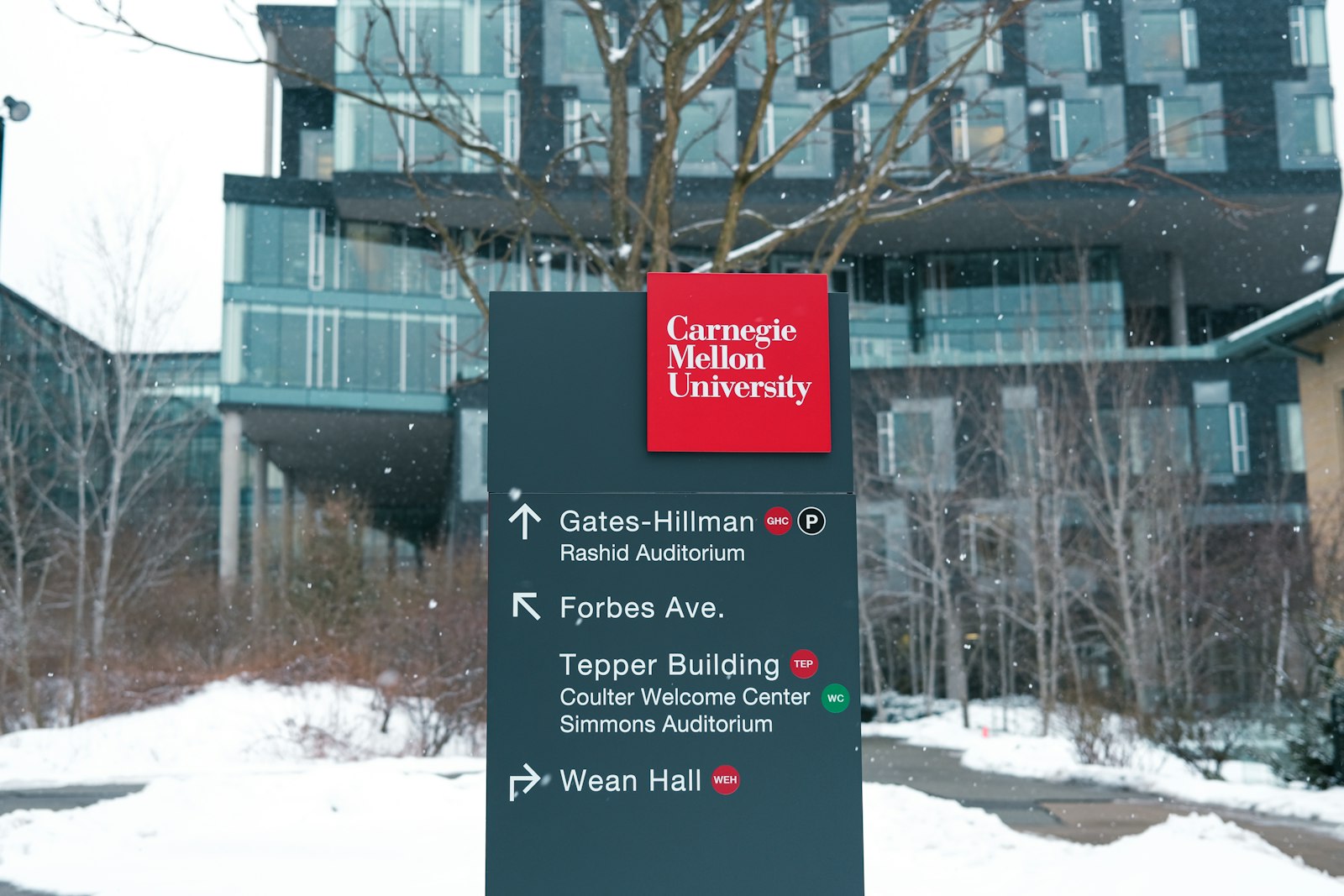
What did Carnegie Mellon announce about the AI-Ready Campus Index?
Carnegie Mellon University says it ranked first in the inaugural AI-Ready Campus Index, a benchmark that, as CMU describes it, assesses how institutions prepare an entire campus for AI. On November 17, 2026, CMU published an account of the work behind the ranking, covering classrooms, operations, governance and its new Miami campus.
According to CMU, the index looks past the classroom to campus life, university operations and workforce readiness. CMU's story argues that readiness is spread across the institution and does not sit in one lab or one vendor contract.
Sourcing note: This analysis relies on CMU's own account, which is institutional communication from the ranked party. We have not independently reviewed the index's methodology, scoring, publisher, participant pool or funding, so the ranking should be read as CMU's characterization of its result.
Why does CMU's AI-Ready Campus ranking matter for institutional strategy?
CMU's top AI-Ready Campus ranking gives AI readiness a public scoreboard, and the first institution to win it may shape how later comparisons are framed. Presidents and provosts should expect trustees, donors and families to ask where their campus stands, possibly before they have settled on an answer.
The most useful part of the CMU story is a small example. Joseph Mertz, who directs the undergraduate Information Systems program, says about 60% of its graduates have historically taken first jobs as software developers. The program now aims to teach students to understand AI well enough to verify when it is right and catch when it is wrong. A program whose graduates cluster in one occupation has to revisit what it promises students when the tools for that occupation change. Many institutions probably have not done that yet, and that is where the competitive pressure is likely to be real. The 60% figure is one program's historical number as reported by CMU. It does not show how AI is currently changing entry-level hiring.
The implications reach well beyond IT. Curriculum committees, career services and employer relations carry this work, along with whoever writes the admissions pitch. CMU's framing also covers operations, where staff use AI to improve university processes, and policies meant to guide responsible use. A campus that can describe all of this coherently may be better positioned than one with scattered pilots, though a coherent description is not a demonstrated outcome.
A first-year index may reward institutions that document breadth of activity well, which could favor large communications and administrative operations. CMU's account does not describe the index's weighting or methodology. A ranking like this is worth tracking and a weak basis for a budget decision.
CMU also describes a structural feature that peers may struggle to replicate. Carnegie Mellon University Miami is presented as a new campus designed for the age of AI, with education, research and partnerships organized around major societal challenges. Institutions with decades of inherited structure may find the same claim harder to make, but a new campus's design intentions are not yet evidence of outcomes.
Other recent stories mark the limits of AI positioning. M State, part of the Minnesota State system, is closing its Detroit Lakes campus amid budget problems, and international enrollment is down this fall. A strong AI story does not make up for a weak enrollment base.
How does the AI-Ready Campus Index define readiness?
The AI-Ready Campus Index covers AI in teaching, campus life, university operations, governance, research and workforce preparation, according to CMU. CMU's account adds a definition from Rebecca Nugent of the Dietrich College of Humanities and Social Sciences: readiness means building the knowledge, infrastructure, systems and culture that let a community use AI thoughtfully, productively and responsibly.
The account does not say whether this is the index's formal definition or CMU's own. Two of the four elements, knowledge and culture, are hard to count. Any index that scores them relies on judgment calls about what counts as evidence, and leaders should ask how those calls were made before treating a rank as meaningful.
What should campus leaders do after CMU's AI-Ready Campus ranking?
Campus leaders should respond to CMU's AI-Ready Campus ranking by auditing four things: the index methodology, programs whose graduates cluster in one occupation, AI use across operations, and whether readiness influences applicants. One executive should own each task, because a rank cannot supply an accurate account of where the institution actually stands.
The president and provost should request the index methodology and ask who runs it, how participants are scored and how it is funded. Then they should decide whether to take part in future editions, and settle that answer before a trustee or journalist asks.
The provost and deans should identify programs whose graduates cluster in one occupation, as CMU's Information Systems graduates do in software development. Each such program should produce a written account of how students learn to verify AI output and what the program now promises about first jobs, based on current placement data.
The CIO and chief operating officer should build one inventory of where staff use AI to improve processes, what policies govern that use and which tools touch student records. CMU's operations story works only because someone can describe it across units.
Enrollment and student affairs leaders should test whether AI readiness influences applicants' choices on their own campus before putting it into recruitment materials. Admitted-student surveys and yield data will answer that better than the marketing office.
Frequently Asked Questions
Who ranked first in the inaugural AI-Ready Campus Index?
Carnegie Mellon University ranked first in the inaugural AI-Ready Campus Index, according to its own announcement. CMU describes the index as examining how institutions prepare their whole campuses for an AI-driven future, including teaching, campus life, university operations and workforce readiness. CMU announced the result on November 17, 2026. We have not independently verified the index's methodology or scoring.
What does AI readiness mean at a university?
According to CMU's Rebecca Nugent, readiness means building the knowledge, infrastructure, systems and culture that allow a campus community to use AI thoughtfully, productively and responsibly. Under that definition, access to the latest technology is only part of the picture. The rest is whether people can use it well in learning and work. The account does not say whether this is the index's formal definition or CMU's own.
How is CMU teaching students to work with AI?
Joseph Mertz, director of CMU's undergraduate Information Systems program, aims to teach students enough about AI to verify when it is right and catch when it is wrong. CMU's account frames this as an alternative to both avoidance and blind trust. About 60% of the program's graduates have historically started as software developers, per CMU. We have not seen outcome data on how well the approach works.
What is Carnegie Mellon University Miami?
Carnegie Mellon University Miami is a new campus that CMU describes as designed for the age of AI. According to CMU, its approach goes beyond how people use the technology to how the university organizes education, research and partnerships around major societal challenges. CMU included it in its November 17, 2026 account of the work behind its AI-Ready Campus Index ranking.
Quick Hits
Kentucky AG, Louisville Foundation Seek to Defy Dead Donors' Wishes
- Core Signal: According to Inside Higher Ed, the University of Louisville Foundation and Kentucky's attorney general have gone to court to remove race- and sex-based restrictions from scholarships set up by donors who have died. The attorney general is appealing after a county judge denied at least one attempt. The headline's framing is the publication's, and the legal questions remain contested.
- Institutional Impact: Presidents, advancement leaders and general counsel with restricted endowed scholarships should follow the appeal, because the outcome could inform how institutions approach modifying donor terms. Its relevance depends on the court's reasoning, the jurisdiction and the specific gift instruments, so institutions should seek legal advice and not generalize from a single case.
Will More International Students Enroll Next Year?
- Core Signal: Preliminary Common App data shows a 9 percent uptick in international applicants for 2026-27, even though international enrollment is down this fall.
- Institutional Impact: Enrollment leaders and CFOs can treat the rebound in applications as an early, tentative planning signal. The data is preliminary, and applications have not yet become enrolled students.
M State's Detroit Lakes campus to close amid systemwide budget woes
- Core Signal: Leaders voted to close the Detroit Lakes campus, which enrolls just over 100 students, as soon as summer 2028.
- Institutional Impact: Small-campus consolidation shows how budget pressure can override mission arguments, so cabinets weighing AI investments should confirm that enrollment and cost fundamentals hold at every site.
Sources
- Carnegie Mellon University News: Inside CMU's Top-Ranked 'AI-Ready Campus' (institutional source; self-reported)
- Inside Higher Ed: Kentucky AG, Louisville Foundation Seek to Defy Dead Donors' Wishes
- Inside Higher Ed: Will More International Students Enroll Next Year?
- Higher Ed Dive: M State's Detroit Lakes campus to close amid systemwide budget woes